
A Visit to Akash’s Farm: From City Dreams to Soil and Soul
Blog post description.
Rajesh Chand
11/10/20252 min read
Art of Eco-Living
Visiting Akash’s farm in the quiet hills of Dhading felt like coming full circle — not just because he’s a childhood friend, but because his journey represents something deeply inspiring about choosing meaning over comfort.
Akash was only 24 when he decided that the city could no longer offer the kind of life he wanted. After returning from India, where he worked in Auroville — a volunteer-based, conscious community in Pondicherry — his perspective on life shifted completely. He had seen firsthand how people could live simply, share resources, and thrive in harmony with nature. That experience planted a seed that would soon take root back home.
With the support of his parents, Akash and his family invested everything they had into a piece of land in the remote hills of Dhading — quite literally, in the middle of nowhere. What began as a leap of faith has since grown into a remarkable story of resilience, learning, and renewal.
Transitioning from an urban lifestyle to farming was far from easy. Akash often says that the land became both his teacher and his test. The family learned agroforestry, rice cultivation, and traditional farming practices from their new community. Slowly, through trial and error, they turned once chemical-laden soil into a vibrant ecosystem guided by permaculture and regenerative agriculture.
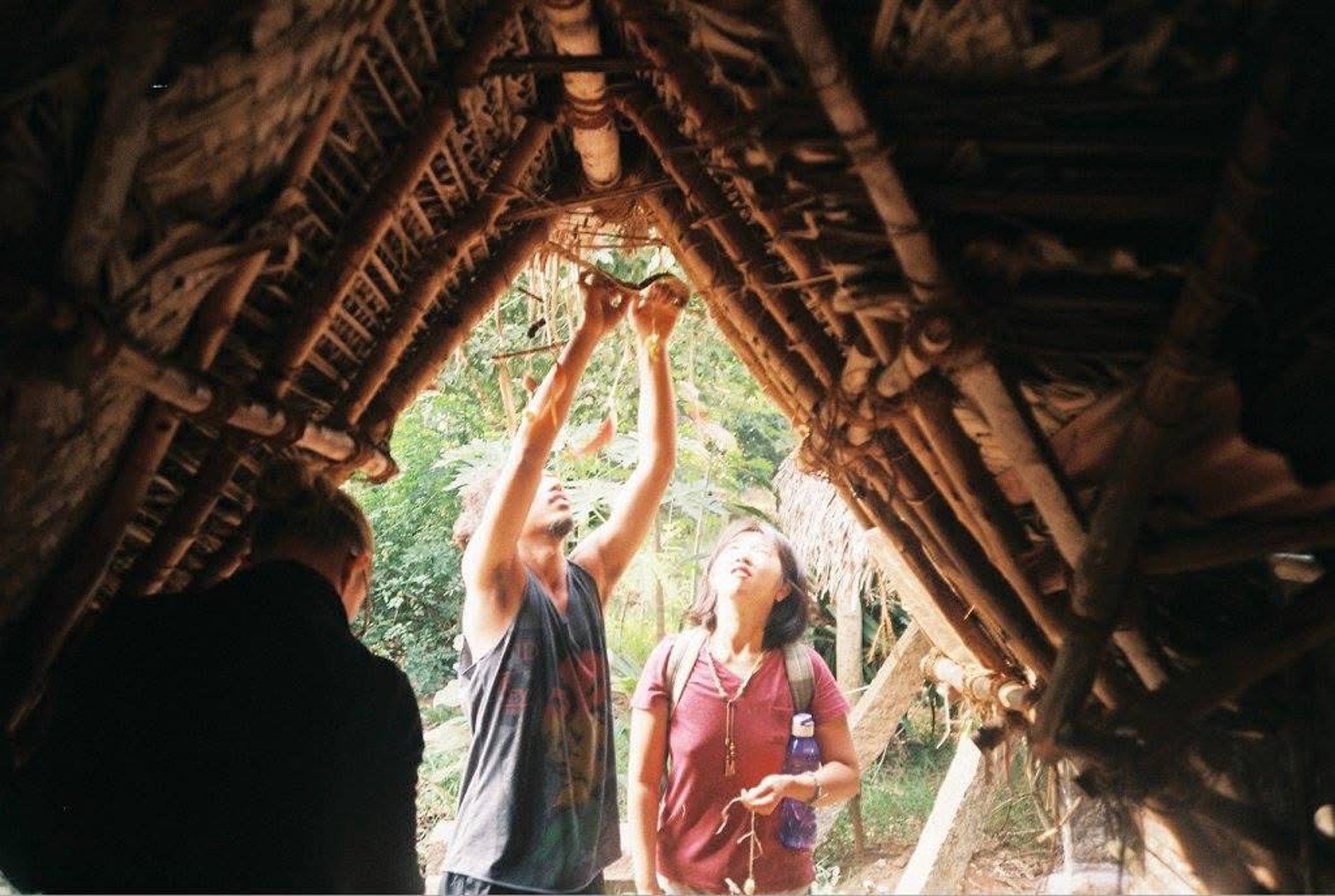
Walking around the farm today, it’s hard not to be amazed. Cats and dogs roam freely; buffaloes and goats graze under the sun; and chickens scratch happily beneath fruit trees. Their home — built with local materials and local hands — is earthquake-resistant, low-cost, and beautifully light on the earth’s footprint.
Akash tells me they now live about 95% self-sufficiently, producing most of what they need from their land. The focus has shifted toward perennial crops and trees, creating long-term abundance. But beyond productivity, this farm is a living philosophy — a statement of what’s possible when vision meets patience.
He dreams of turning the space into a research and education center — a place for retreats, workshops, and community exchange focused on soil regeneration, indigenous seed saving, and sustainable living.
As we sat under the shade of a guava tree, drinking cool water that had flowed down from natural springs — the same water source that’s sustained local villages for generations — I was struck by how deeply intertwined everything here feels. The land, the people, the animals, the water — all part of a system that sustains itself, quietly and beautifully.
In the city, we often turn a tap without knowing where the water comes from. Here, Akash and his community harvest, conserve, and share water through traditional channels, providing enough for eight to ten households. It’s a practice rooted in respect — not just for water as a resource, but as a life force.
Before I left, Akash said something that stayed with me:
“We’ve learned how to live with less. Now, the question is — how do we live better with what we already have?”
His words echoed through the hills as I walked away, reminding me that regeneration isn’t only about the soil — it’s about the spirit.